
Opening an Escape Room in UAE: Rules & Licensing | Indestroom
Skip to main content
Want to have a free consultation about your escape room business?
Choose a time-slot
Want to have a free consultation about your escape room business?
Choose a time-slot
Indestroom > Calculation of ROI: Escape Room Profitability
Published date: 06.03.2026
Modified date: 06.03.2026
Author: INDESTROOM

Opening an Escape Room in UAE: Licensing, Fire Codes, and Cultural Localization Rules

Many entrepreneurs see the UAE’s booming entertainment market and imagine a simple path to success: rent space, build puzzles, open doors. Reality is far more complex. We’ve guided 17 escape room launches across Dubai, Abu Dhabi, and Sharjah—and witnessed promising projects stall for months due to licensing missteps, Civil Defense rejections, or culturally insensitive themes. This guide shares exactly what you need to navigate the UAE’s regulatory landscape and launch successfully.

Opening an Escape Room in UAE: Licensing, Fire Codes, and Cultural Localization Rules

Step 1: Choosing Your License Structure — Mainland vs. Free Zone

Your first decision determines ownership structure, operational flexibility, and hidden costs.

Mainland License (DED — Department of Economic Development)
  • Requires a UAE national service agent (51% nominal ownership) or qualifies under 100% foreign ownership laws for specific activities
  • Allows direct retail sales to UAE residents and tourists
  • Mandatory physical office/venue in approved commercial space
  • Average setup cost: AED 15,000–25,000 ($4,100–$6,800) excluding agent fees

Free Zone License (e.g., DMCC, Dubai South)
  • 100% foreign ownership with no local partner required
  • Faster setup (2–3 weeks vs. 6–8 weeks for mainland)
  • Restrictions: Cannot conduct retail business directly with UAE market without additional permits
  • Best for B2B operations (e.g., supplying equipment to other venues) rather than consumer-facing escape rooms

Our recommendation: For consumer-facing escape rooms, mainland licensing remains the practical choice despite partnership requirements. Free zones create unnecessary friction for walk-in customers.

Step 2: Civil Defense Approval — Non-Negotiable Safety Requirements

No venue opens without Civil Defense clearance. Their inspectors reject 40% of first-time applications — usually for these three violations:

1. Locked emergency exits — Any door designated as an emergency exit must open outward with panic bar hardware. Magnetic locks require automatic release during fire alarm activation. Decorative “locked” doors must be clearly non-egress routes.

2. Flammable materials — Upholstery, curtains, and foam props require fire-retardant certification (UAE.S 5019 standard). We’ve seen venues fail inspection because decorative “ancient scrolls” used untreated paper.

3. Inadequate emergency lighting — Minimum 30 minutes backup power for exit path illumination. Battery-backed LED strips must activate automatically during power failure.

Pro tip: Submit detailed floor plans with fire exit routes marked before construction begins. Civil Defense provides pre-approval consultations—a step 70% of operators skip, then face costly rebuilds.

Step 3: Cultural Localization — What Works (and What Gets Rejected)

UAE audiences embrace immersive entertainment — but certain themes trigger immediate rejection from Department of Tourism or municipal authorities:

Strictly prohibited
1. Religious figures or sacred sites as puzzle elements
2. Depictions of UAE leadership in fictional/negative contexts
3. Alcohol consumption as gameplay mechanic (even simulated)
4. Themes implying disrespect toward local traditions (e.g., “stealing artifacts from a mosque”)

Successful adaptations we’ve implemented
1. “Desert Explorer” replacing generic “Egyptian Tomb” (avoids cultural appropriation while keeping adventure appeal)
2. “Future Dubai 2071” leveraging national vision themes with positive futurism
3. “Pearl Diving Mystery” celebrating Emirate maritime heritage with authentic storytelling

Key insight: Localization isn’t censorship — it’s a competitive advantage. Venues using culturally resonant themes see 35% higher repeat visitation from local families according to our 2025 operator survey.

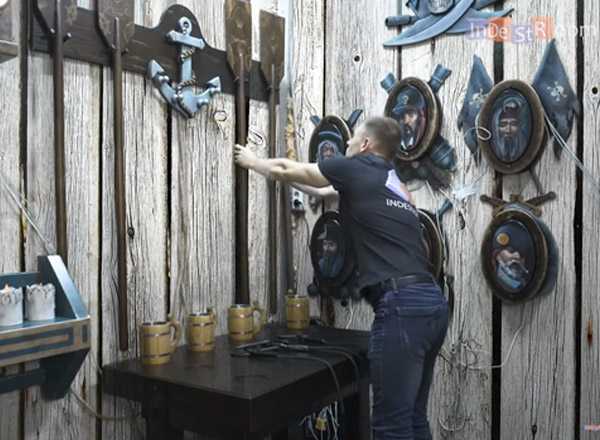
Step 4: Real Investment Breakdown — Beyond the Obvious Costs

Expense Category Budget Tier (1 room) Mid-Market (2 rooms) Premium (3+ rooms)
Design & Build $45,000–$65,000 $85,000–$120,000 $140,000–$220,000
Civil Defense Compliance Upgrades $8,000–$15,000 $15,000–$25,000 $25,000–$40,000
Hidden Costs Often Missed:
Rent deposit (3–6 months upfront) $9,000–$18,000 $18,000–$36,000 $36,000–$60,000
License setup + service agent $7,000–$12,000 $7,000–$12,000 $7,000–$12,000
Equipment certification (ESMA/EQM) $3,500–$6,000 $6,000–$10,000 $10,000–$18,000
Total Realistic Investment $72,500–$116,000 $131,000–$203,000 $218,000–$350,000


Critical note: Equipment certification through Emirates Authority for Standardization and Metrology (ESMA) adds 4–6 weeks to launch timelines. Budget for this early — don’t treat it as an afterthought.

Step 5: The Automation Advantage — Why It’s Essential in UAE

With game master salaries averaging AED 4,500–6,500 ($1,200–$1,800) monthly plus housing allowances, labor costs consume 38–45% of revenue for manually operated venues. Our data shows automated venues achieve profitability 3–5 months faster because:
  • Single staff member can monitor 3–4 rooms simultaneously via centralized control panel
  • Self-resetting puzzles eliminate 15–20 minutes of manual reset between sessions
  • Integrated hint systems reduce staff intervention by 70% during gameplay

Automation isn’t a luxury in UAE — it’s a financial necessity for sustainable margins.

Your Pre-Submission Checklist

Before submitting documents to DED or Civil Defense, verify:
1. Emergency exits marked with photoluminescent signage (UAE Civil Defense Standard 412)
2. All electrical installations certified by Dubai Electricity and Water Authority (DEWA) approved contractor
3. Maximum occupancy calculated at 2.5 sqm per person (per Dubai Municipality guidelines)
4. No religious/cultural sensitivities in theme narrative or visual assets
5. Equipment certification paperwork (ESMA/EQM) ready for electronic submission
6. Floor plan includes dedicated prayer room space (recommended for venues >200 sqm)

Ready to Launch Without Costly Delays

The difference between a 4-month and 10-month launch timeline often comes down to regulatory preparation — not construction speed. We provide free pre-submission audits for venues using our design services, identifying Civil Defense or cultural compliance gaps before you pour concrete or install wiring.

Because in the UAE, the fastest path to opening isn’t cutting corners — it’s building correctly from day one. Let us help you navigate the requirements, so your focus stays where it belongs: creating unforgettable experiences that respect local culture while delivering strong returns. Contact us for a confidential consultation on adapting your concept to UAE regulations — we’ll map your exact licensing path and compliance checklist within 48 hours.
Published date: 06.03.2026
Modified date: 06.03.2026
Author: INDESTROOM

Rating: 4,95
READ MORE INTERESTING ARTICLES

There are lots of requirements for an escape room to be good. It doesn’t matter whether there are great puzzles and decoration if a theme was chosen poorly…

An escape room is a game for a team in which you and your teammates face challenges discovering hidden escape room clues that may help to solve common escape…

Escape rooms are an interesting pastime for anyone. They feature a number of players, a room full of puzzles and an exciting scenario, where one player has to find the key to…
For some inexplicable reasons escape rooms have become popular, not only among young people, looking for a thrilling experience on a Saturday night, but…

The escape room industry is relatively new. 15 years ago it emerged in Japan and made its way into the Western and Eastern markets in the early 2010s…