
Home > Indestroom > Blog > The Evolution of Pub Quizzes to High Tech Quiz Shows
The Evolution of Pub Quizzes to High Tech Quiz Shows

Contents
- 1. Timeline of Quiz Evolution
- 2. The Origins: Pub Quizzes in 1970s Britain
- 3. Expansion in the 1980s–1990s: Trivia Becomes Mainstream
- 4. Digital Transformation: 2000s – Early 2010s
- 5. From Quiz Nights to Quiz Rooms: The Rise of Tech-Based Formats
- 6. Business Models and Franchising
- 7. Localization and Global Spread
- 8. Why Trivia Remains Unstoppable
Quizzes have grown far beyond their humble origins, transitioning from simple entertainment during pub nights to state-of-the-art experiences in high-tech game show experience rooms. This fascinating evolution reflects how this game has intertwined with culture, embraced technological innovation, and captured the imaginations of people across the globe.
But what is trivia night at its core, and how did it become a global phenomenon? This article traces quizzes’ rich history, from their beginnings in the 1970s Britain to their modern integration into businesses, entertainment, and technology. You’ll discover their cultural significance, the role of shows like Mastermind and Who Wants to Be a Millionaire?, the darker history of the 1950s quiz show scandals, and how going digital forever changed the game. Buckle up for an in-depth look at one of the most adaptive and enduring forms of entertainment.
In recent years, trivia has found its way into unexpected formats such as hybrid escape room games, livestreamed competitions, and mobile-based real-time tournaments. Today, millions of people across the world engage with trivia regularly—whether through casual bar nights, corporate training, or competitive online platforms.
But what is trivia night at its core, and how did it become a global phenomenon? This article traces quizzes’ rich history, from their beginnings in the 1970s Britain to their modern integration into businesses, entertainment, and technology. You’ll discover their cultural significance, the role of shows like Mastermind and Who Wants to Be a Millionaire?, the darker history of the 1950s quiz show scandals, and how going digital forever changed the game. Buckle up for an in-depth look at one of the most adaptive and enduring forms of entertainment.
In recent years, trivia has found its way into unexpected formats such as hybrid escape room games, livestreamed competitions, and mobile-based real-time tournaments. Today, millions of people across the world engage with trivia regularly—whether through casual bar nights, corporate training, or competitive online platforms.
Timeline of Quiz Evolution
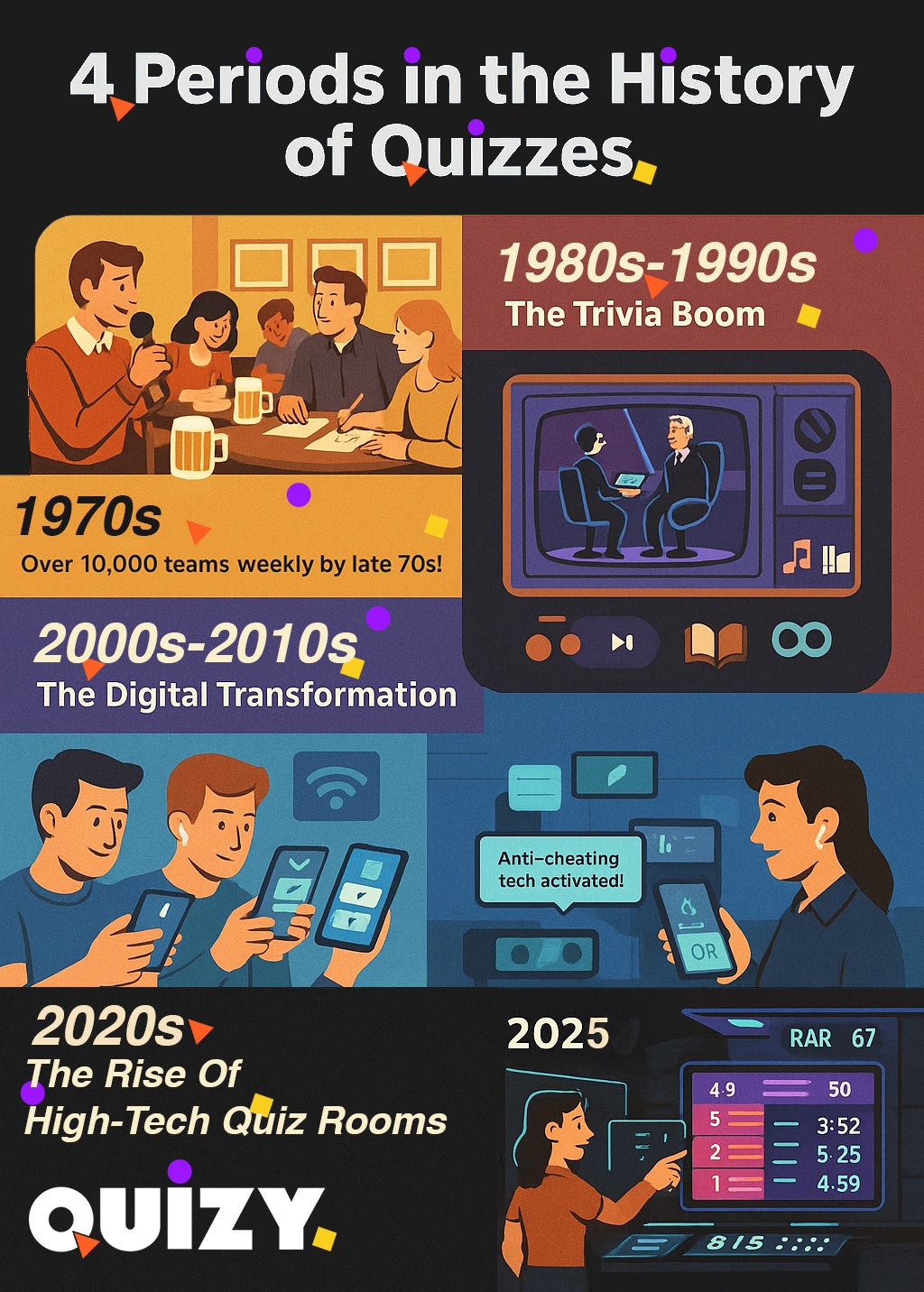
• 1970s: Pub quizzes emerge in Britain as a way to boost weekday pub attendance. Trivia becomes more than a pastime; it becomes culture.
• 1980s–1990s: Themed questions, pop culture, and iconic television shows burst onto the scene, drawing millions of viewers worldwide.
• 2000s–2010s: Advances in technology—including projectors, multimedia questions, and anti-cheating software like SpeedQuizzing—transform game nights into dynamic events.
• 2020s: Modern rooms blend gamification, immersive tech, and automation to redefine it for a new generation.
• 1980s–1990s: Themed questions, pop culture, and iconic television shows burst onto the scene, drawing millions of viewers worldwide.
• 2000s–2010s: Advances in technology—including projectors, multimedia questions, and anti-cheating software like SpeedQuizzing—transform game nights into dynamic events.
• 2020s: Modern rooms blend gamification, immersive tech, and automation to redefine it for a new generation.
The Origins: Pub Quizzes in 1970s Britain
Before technology entered the picture, trivia thrived in its simplest form. “What is a pub quiz?” people might ask today, as their modern-day knowledge and fun entertainment experiences vary so widely. However, its roots are straightforward. The first pub games were designed to attract patrons on quieter nights, offering a fun and engaging activity. What unfolded was a phenomenon that would give rise to a cultural legacy.
Pub games featured teams gathered in cozy, albeit often beer-sticky, settings, armed only with pens and paper. The goal? To pit themselves against other enthusiasts by answering general knowledge questions posed by a gamemaster. Teams competed to demonstrate their knowledge of history, pop culture, and more. This essence of friendly competition and camaraderie defined what is now known as “pub quiz.”
Pub games featured teams gathered in cozy, albeit often beer-sticky, settings, armed only with pens and paper. The goal? To pit themselves against other enthusiasts by answering general knowledge questions posed by a gamemaster. Teams competed to demonstrate their knowledge of history, pop culture, and more. This essence of friendly competition and camaraderie defined what is now known as “pub quiz.”
Reasons Behind Pub Quizzes’ Popularity
• Community Bonding: Weekly games offered locals a chance to gather, socialize, and strengthen friendships.
• Accessibility: With no special equipment or skills necessary, anyone could join a team and have a shot at victory.
• Tradition: Many pubs established weekly games as a ritual, fostering loyalty and creating closer-knit communities.
Some early pub games even included physical challenges or song-guessing rounds using cassette tapes. The format was far more experimental than people might assume, laying the groundwork for the creative game show mechanics we see today.
Did You Know?
By the late 1970s, nearly 10,000 teams across the UK were participating in pub games every week. “What is bar trivia,” you ask? This is where its global success began.
• Accessibility: With no special equipment or skills necessary, anyone could join a team and have a shot at victory.
• Tradition: Many pubs established weekly games as a ritual, fostering loyalty and creating closer-knit communities.
Some early pub games even included physical challenges or song-guessing rounds using cassette tapes. The format was far more experimental than people might assume, laying the groundwork for the creative game show mechanics we see today.
Did You Know?
By the late 1970s, nearly 10,000 teams across the UK were participating in pub games every week. “What is bar trivia,” you ask? This is where its global success began.
Expansion in the 1980s–1990s: Trivia Becomes Mainstream
The 1980s and 1990s ushered in an expansion for trivia, with pub games evolving into mainstream entertainment. This period saw groundbreaking changes in formats, themes, and audiences.
Emergence of Themed Rounds
Introducing questions based on specific topics like music, movies, history, or science added flair to game nights, engaging players with their personal interests. Themes broadened the player pool beyond regular pub-goers, drawing in diverse groups.
Television Shows Take Center Stage
British quiz shows like Mastermind, The Weakest Link, and University Challenge not only entertained but introduced trivia as a captivating element of cultural identity. The arrival of Who Wants to Be a Millionaire? in 1998 raised the stakes further. First broadcast in 1998, the show revolutionized the way it was presented to global audiences. The signature lifelines, dramatic pauses, and sizable financial rewards captivated audiences from the UK to Australia.
Shows like Jeopardy! and Family Feud in the United States mirrored the success of British productions, often pulling in audiences of over 10 million per episode. Their formats became cultural touchstones, and catchphrases entered everyday language.
Fun Fact
By the late 1990s, Who Wants to Be a Millionaire? had been broadcast in over 100 countries, establishing trivia as a global entertainment format.
Shows like Jeopardy! and Family Feud in the United States mirrored the success of British productions, often pulling in audiences of over 10 million per episode. Their formats became cultural touchstones, and catchphrases entered everyday language.
Fun Fact
By the late 1990s, Who Wants to Be a Millionaire? had been broadcast in over 100 countries, establishing trivia as a global entertainment format.
1950s Quiz Show Scandals
Despite this success, the dark days of the “quiz show scandals” in the 1950s remind us of trivia’s tumultuous relationship with mass media. American shows like Twenty-One drew public ire when it was revealed contestants had been secretly fed answers to manipulate outcomes. The resulting uproar led to a regulatory overhaul, forging trust that shapes game show credibility today.
Digital Transformation: 2000s – Early 2010s
By the early 2000s, knowledge entertainment was adapting to a digital world. Hosts introduced digital features to transform bar game into a more immersive, sharable experience.
Tech Upgrades That Changed the Game
1. Multimedia Rounds: The addition of projectors and sound systems brought a TV-like production quality to trivia nights. Playing music clips or showing iconic movie scenes added excitement and helped players recall answers.
2. Cheat Prevention: Anti-cheating software restricted phone use for answers and ensured a level playing field. This prevented problems that had previously plagued many popular nights.
3. Online Integration: Remote participation allowed groups spread across regions — even continents — to compete together.
By 2015, over 3,000 venues worldwide had adopted the SpeedQuizzing platform, reducing the number of cheating complaints by more than 70% and increasing average session participation time by 25%.
2. Cheat Prevention: Anti-cheating software restricted phone use for answers and ensured a level playing field. This prevented problems that had previously plagued many popular nights.
3. Online Integration: Remote participation allowed groups spread across regions — even continents — to compete together.
By 2015, over 3,000 venues worldwide had adopted the SpeedQuizzing platform, reducing the number of cheating complaints by more than 70% and increasing average session participation time by 25%.
Turn Trivia Into a Thrilling Experience
From Trivia Night to Memorable Entertainment
Step into the future of trivia! Discover setups that combine engaging themes, dynamic technology, and automated gameplay to cater to audiences of all kinds.
From Trivia Night to Memorable Entertainment
Step into the future of trivia! Discover setups that combine engaging themes, dynamic technology, and automated gameplay to cater to audiences of all kinds.
Turn Trivia Into a Thrilling Experience
From Trivia Night to Memorable Entertainment
Step into the future of trivia! Discover setups that combine engaging themes, dynamic technology, and automated gameplay to cater to audiences of all kinds.
From Trivia Night to Memorable Entertainment
Step into the future of trivia! Discover setups that combine engaging themes, dynamic technology, and automated gameplay to cater to audiences of all kinds.
Learn More About Game-Changing Trivia
These digital advancements elevated “what is trivia night” to an experience as vibrant as the social bonds it fostered. Pub games weren’t just pub-exclusive anymore; they were happening everywhere, and people loved it.
From Quiz Nights to Quiz Rooms: The Rise of Tech-Based Formats
Welcome to the pinnacle of modern trivia experiences. Gone are the days of paper scorecards and pub stools; the future thrives in immersive rooms that marry entertainment, technology, and innovation.
What Are Quiz Rooms?
From lively game nights in bars to immersive tech-driven rooms, the evolution of trivia formats has reshaped how we engage with knowledge and entertainment. American television shows like Jeopardy! popularized the idea of contestants going head-to-head in high-stakes competition. Now, that same thrill has found its way into modern spaces, where technology enhances every moment. Whether you’re teaming up with friends or taking on strangers, these high-tech setups offer the best experiences, blending strategy, excitement, and innovation. While an occasional issue may mar the ride, quiz formats continue to stand the test of time, proving that trivia is more than just a game; it’s an evolving cultural phenomenon.
Tangible Features of Quiz Rooms
• Immersive Design: LED panels and adaptive lighting react dynamically to the game’s progression.
• Automation: The room runs itself, freeing players to focus solely on their experience.
• Inclusive Appeal: Perfect for corporate events, birthdays, team-building, or even creative date nights.
• Automation: The room runs itself, freeing players to focus solely on their experience.
• Inclusive Appeal: Perfect for corporate events, birthdays, team-building, or even creative date nights.
Business Models and Franchising
Game show experience rooms are no longer just entertainment but also a profitable business venture. Quiz rooms offer scalable opportunities for entrepreneurs looking to capitalize on this uniquely adaptable format.
Franchising Models
Quiz rooms have grown into a lucrative industry.
Startup Costs:
• Hardware (stations, tablets, LED setup): €15,000–€30,000
• Software licenses + question packs: €5,000+
• Installation & branding: €10,000
Most franchises come with plug-and-play setups, requiring minimal preparation. Here’s what’s often included in a franchise package:
• Tablet-integrated or touchscreen consoles.
• Ongoing support + updates for both technology and question content.
• Pre-installed software.
• Pre-programmed question databases.
• Localized trivia content in multiple languages. • Staff training modules.
A well-performing venue with three rooms running multiple sessions daily can generate a gross monthly income of €20,000–€30,000. With streamlined automation and minimal staffing, some operators report operating margins of 50–60%, especially in high-traffic locations.
Startup Costs:
• Hardware (stations, tablets, LED setup): €15,000–€30,000
• Software licenses + question packs: €5,000+
• Installation & branding: €10,000
Most franchises come with plug-and-play setups, requiring minimal preparation. Here’s what’s often included in a franchise package:
• Tablet-integrated or touchscreen consoles.
• Ongoing support + updates for both technology and question content.
• Pre-installed software.
• Pre-programmed question databases.
• Localized trivia content in multiple languages. • Staff training modules.
A well-performing venue with three rooms running multiple sessions daily can generate a gross monthly income of €20,000–€30,000. With streamlined automation and minimal staffing, some operators report operating margins of 50–60%, especially in high-traffic locations.
Comparison Table: Classic Pub vs. Franchise Quiz Room
Category |
Traditional Pub Quizzes |
Modern Quiz Rooms |
| Format | Informal, team-based trivia nights in pubs and bars. | Structured, tech-driven with automated, immersive gameplay. |
| Technology | Minimal – Pen, paper, and a gamemaster to call questions. | High-tech tools like touchscreen consoles, LED panels, and real-time leaderboards. |
| Audience | Local pub-goers, trivia enthusiasts. | Wide demographic including families, corporate teams, and digital natives. |
| Revenue | Low-margin (F&B sales). | High-margin (ticketed sessions). |
| Tech Need | None. | High (hardware + software). |
| Team Needed | 1 host. | 0 staff. |
| Scalability | Low, limited by venue size and host availability. | High, scalable across franchises, with compact setups and automation. |
Create Magic with High-Tech Quiz Rooms
Transform your venue into the ultimate trivia destination. Learn how to deliver automated, immersive quiz sessions that engage and excite players.
Transform your venue into the ultimate trivia destination. Learn how to deliver automated, immersive quiz sessions that engage and excite players.
Case Study
A single room in France, launched under the franchise, grew into 50 successful. It’s a prime example of how scalability and innovation combine to benefit players and franchisees alike.
A single room in France, launched under the franchise, grew into 50 successful. It’s a prime example of how scalability and innovation combine to benefit players and franchisees alike.
Localization and Global Spread
One reason “quiz room” franchises have seen global success is their ability to adapt to cultural and linguistic preferences. While questions in Japan may revolve around anime and manga, those in Germany often lean academic and historical, providing universal appeal.
In Scandinavia, questions often feature local mythology, while in India, Bollywood and cricket dominate trivia themes. Localization is not just about language — it’s about cultural relevance.
In Scandinavia, questions often feature local mythology, while in India, Bollywood and cricket dominate trivia themes. Localization is not just about language — it’s about cultural relevance.
Trivia Around the World
• UK: Known for whimsy and pop culture references alongside pub banter.
• USA: In American trivia culture, the focus is often on entertainment-heavy formats with upbeat hosts and quickfire rounds.
• Japan: Unique focus on animated pop culture.
• Germany: Academic rigor, slower pacing, more intellectual themes
• Japan: Anime, video games, local pop icons
• UAE: Multilingual trivia, inclusive themes, family-friendly
Fun Fact: In the Netherlands, rooms often offer bilingual content to cater to international expats.
This localization ensures accessibility and engagement, whether in Berlin or Dubai.
• USA: In American trivia culture, the focus is often on entertainment-heavy formats with upbeat hosts and quickfire rounds.
• Japan: Unique focus on animated pop culture.
• Germany: Academic rigor, slower pacing, more intellectual themes
• Japan: Anime, video games, local pop icons
• UAE: Multilingual trivia, inclusive themes, family-friendly
Fun Fact: In the Netherlands, rooms often offer bilingual content to cater to international expats.
This localization ensures accessibility and engagement, whether in Berlin or Dubai.
Why Trivia Remains Unstoppable
Despite living in a world dominated by hyper-short content and instant gratification, quizzes have managed to consistently capture our attention. Why? Because they tap into something fundamentally human:
• A Shared Experience: They bring people together, whether it’s friends at a pub, families at home, or colleagues to one space. They foster connection beyond just screen time.
• The Thrill of Competitive Collaboration: Trivia excites because it’s a blend of teamwork, strategy, and friendly rivalry. It’s not just about competing but collaborating in a way that feels rewarding.
• The Joy of Random Knowledge: There’s something magical about knowing a random fact and being rewarded for it. Whether it’s a prize or just bragging rights, trivia validates our curiosity.
Trivia uniquely bridges generations. Grandparents and grandchildren can often enjoy the same game together, sharing facts, laughs, and stories. This intergenerational appeal helps trivia remain both nostalgic and future-proof.
These games are also endlessly adaptable. Fresh themes, clever formats, and evolving technology, like high-tech rooms, keep them both engaging and innovative. They bring together entertainment, memory, and emotion, creating an experience that stays relevant.
Even with the rise of AI and streaming, quizzes endure because they satisfy deep, universal needs: curiosity, validation, camaraderie, and the pure joy of play.
• A Shared Experience: They bring people together, whether it’s friends at a pub, families at home, or colleagues to one space. They foster connection beyond just screen time.
• The Thrill of Competitive Collaboration: Trivia excites because it’s a blend of teamwork, strategy, and friendly rivalry. It’s not just about competing but collaborating in a way that feels rewarding.
• The Joy of Random Knowledge: There’s something magical about knowing a random fact and being rewarded for it. Whether it’s a prize or just bragging rights, trivia validates our curiosity.
Trivia uniquely bridges generations. Grandparents and grandchildren can often enjoy the same game together, sharing facts, laughs, and stories. This intergenerational appeal helps trivia remain both nostalgic and future-proof.
These games are also endlessly adaptable. Fresh themes, clever formats, and evolving technology, like high-tech rooms, keep them both engaging and innovative. They bring together entertainment, memory, and emotion, creating an experience that stays relevant.
Even with the rise of AI and streaming, quizzes endure because they satisfy deep, universal needs: curiosity, validation, camaraderie, and the pure joy of play.
Ready to Launch Your Own Quiz Experience?
Quizzes have come a long way from their humble beginnings in cozy UK pubs. Today, they connect immersive technology with age-old entertainment to deliver unforgettable experiences. Looking to create something just as memorable? Start with a high tech room and transform your venue into an entertainment hotspot.
The future of trivia is smart, social, and scalable.
Start Today with Quizy — Launch Your Own High-Tech Room
The future of trivia is smart, social, and scalable.
Start Today with Quizy — Launch Your Own High-Tech Room
Be a Part of Trivia’s Future
Join the Trivia Revolution Today
Join the Trivia Revolution Today
Be a Part of Trivia’s Future Join the Trivia Revolution Today
Stay at the forefront of entertainment by blending tradition and innovation. Whether you want to host trivia nights or build immersive quiz rooms, now is the perfect time to start!
Get Started Now